
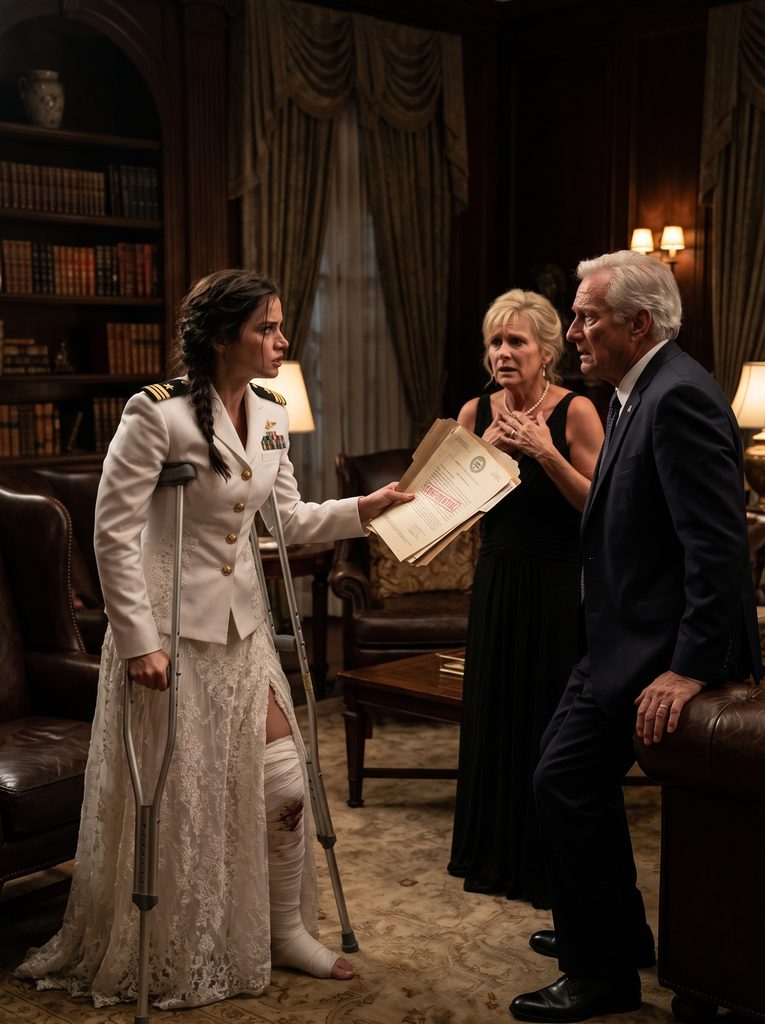
PART 1: My Parents Bought My Sister a $150,000 Yacht While I Begged Them for $5,000 to Save My Leg
The photograph appeared on my phone at 8:17 on a Thursday morning. My mother was standing on the deck of a beautiful white yacht, holding a champagne glass beside my father and my younger sister, Madison. Behind them, the ocean stretched endlessly beneath a brilliant blue sky.
My mother had written a caption that made my stomach tighten: “There is nothing more rewarding than seeing your children achieve their dreams. Madison has always deserved the very best, and we are so proud to help make her dreams come true.
Family means everything!” Hundreds of people had already liked the photograph. Relatives congratulated my parents, friends called Madison lucky, and strangers praised my family for supporting their daughter’s ambitions. I stared at the screen from my hospital bed, unable to understand how the same parents who had told me they couldn’t afford five thousand dollars could suddenly celebrate a purchase worth $150,000.
Three days earlier, I had called them crying after a serious accident during my military deployment left my right leg badly injured. My doctors were treating me, but I needed additional financial help with urgent recovery expenses, rehabilitation arrangements, and related costs.
I had asked for the money as a temporary loan, promising to repay it as soon as my finances were settled. My father sighed and said they had their own expenses. My mother reminded me that I had chosen a dangerous career. Madison didn’t even answer my call. Yet there they were, smiling beside a yacht while I lay in a hospital room trying to figure out how to cover the next stage of my recovery.
I had always been the dependable daughter. Growing up, I learned to work for what I wanted and never ask for more than I needed. When I was seventeen, I worked evenings at a grocery store to save money for my first car.
When I joined the military, my parents warned me that I was making my life unnecessarily difficult, but my grandmother, Eleanor, supported me. She was the only person in the family who never confused independence with a lack of need. My younger sister, Madison, had always received more help. If she wanted an expensive birthday party, our parents organized it. If she struggled with rent, my father transferred money. When she decided to start a business, my mother contacted everyone she knew to find potential customers.
I never resented her for receiving help because I believed our parents simply understood that we were different. Madison needed encouragement, while I seemed capable of handling everything myself. Over the years, I helped her prepare résumés, reviewed business proposals, and listened to her complain about relationships that never seemed to work out.
I did these things because I loved her, not because I expected anything in return. When I was injured, however, I discovered how little my family understood the difference between being strong and never needing support. I called my father from the hospital and explained the situation carefully. I told him about my injury, the treatment plan, and the five thousand dollars I needed to cover several urgent expenses.
He promised to discuss it with my mother. Hours later, my mother called and explained that they were preparing for retirement and that Madison was trying to establish her business. When I reminded her that I was lying in a hospital bed, she answered, “You chose this career, Emily. We warned you it could be dangerous.” I ended the call feeling as though I had done something wrong simply by asking my own parents for help.
That night, I messaged Madison to congratulate her on the yacht. She replied that our parents wanted to do something special for her and that the boat would be an investment for her business. When I mentioned that they had refused to help me with my medical expenses, she immediately became defensive. “Don’t start making everything about you,” she wrote.
I asked whether she knew they had told me they couldn’t afford the money. She answered that the family finances were complicated and that the yacht was a separate matter. I wanted to argue, but I realized I had spent too many years trying to make Madison understand problems she had no interest in understanding. The next morning, my father called again.
He was angry that I had mentioned the yacht and insisted that I had no right to question his financial decisions. I explained that I wasn’t asking him to justify buying my sister something expensive; I was trying to understand why he had claimed there was no money available when I needed help recovering from an injury. He responded that Madison needed more support than I did because I had always been independent.
His words hurt more than I expected. I had spent my entire life trying not to become a burden, and now that effort had become the excuse for denying me help. I told him I understood and ended the conversation. Afterward, I reviewed my savings, contacted the relevant military and medical support offices, and began exploring payment arrangements.
I decided I would no longer wait for my parents to determine whether my recovery was important enough to support. That afternoon, a financial counselor named Daniel Reeves visited my room to help organize my paperwork. While reviewing an old document, he noticed a reference to a family trust established years earlier. He asked whether I knew anything about it.
I shook my head, confused, until he showed me a photocopy bearing my full name and the name of my grandmother.
The document was dated twelve years earlier, several months before my grandmother died. It referred to an education and welfare trust intended to support my future. I had never heard of it, and I had never received money from anything resembling a trust. Daniel explained that he couldn’t determine the current balance or who controlled the account, but he recommended that I investigate it with an attorney.
I contacted Laura Bennett, a lawyer recommended through the hospital’s assistance office, and sent her a copy of the document. She cautioned me not to jump to conclusions before the records were reviewed. Then I opened the small wooden box containing the few things Grandma had left me.
Inside was a silver bracelet, an old photograph, and a handwritten letter I had read countless times. “Never let anyone convince you that being capable means you must face every hardship alone,” she had written. I suddenly wondered whether she had known that I would someday need the kind of help my parents had refused to provide. Two days later, the financial institution confirmed that records existed for a trust created by my grandmother.
The representative couldn’t disclose the details without additional verification, but she confirmed that my name appeared in the original beneficiary records. Laura submitted a formal request for the complete documentation. Then an unfamiliar man called me.
He introduced himself as Robert Hayes, an accountant who had managed the trust for several years. He told me that my grandmother had left specific instructions regarding my future and that he possessed documents that might explain what had happened after her death. I asked him whether my parents knew about the trust. He paused before answering, “Yes, Emily. They knew.” My heart began to race.
For twelve years, I had believed that I had nothing to rely on except my own work and determination. Now I was beginning to suspect that the truth about my family’s finances was very different from the story I had been told. Robert agreed to meet with Laura, and before we ended the call, he added one sentence that changed everything: “Your grandmother was very clear that the money was supposed to protect your future.”

PART 2: The Secret Account My Parents Never Told Me About
Robert Hayes arrived at Laura Bennett’s office carrying a thick leather folder filled with documents. He explained that my grandmother, Eleanor Carter, had established the trust after selling a property she had inherited from her parents.
The original funding was approximately $420,000, and the money was intended to support education, medical needs, and other expenses permitted by the trust agreement. My grandmother had wanted both granddaughters to have opportunities, but she had made separate provisions for us because our circumstances and future plans were different.
Robert showed us the original agreement, which identified me as a beneficiary and listed the people authorized to administer the funds. My parents had become involved in managing certain financial arrangements after I turned eighteen, but they had not been given unlimited authority to use the money for any purpose they wished.
I stared at the pages, struggling to understand how such an important part of my life could have remained hidden from me. While I had been working extra shifts to afford a laptop, saving for professional training, and carefully managing my rent, a trust had existed specifically to provide financial protection for my future. Laura asked Robert to explain the withdrawals recorded in the documents.
Several transfers had been described as educational or medical support, but the money had gone into accounts connected to my father’s businesses rather than directly to me or to a medical provider. Robert explained that he had approved certain transactions based on the authorizations and descriptions he received at the time.
He had not followed the funds beyond the receiving accounts, so he could not confirm how they had ultimately been spent. Laura emphasized that the transactions required investigation before anyone could conclude that wrongdoing had occurred. Nevertheless, the records raised an obvious question: if the trust was intended to support me, why had I never been told it existed?
As Laura reviewed the documents, we discovered several transfers made over a period of years. Some were relatively small, while others involved substantial amounts. A number of them had been described as loans to family businesses or payments for expenses connected to the household.
Certain amounts appeared to have been repaid, but the available records did not fully explain every transaction. I asked how much money remained in the trust, and Robert admitted that his most recent statement was several years old. It showed a balance significantly lower than the original principal, but he could not confirm the current value. Laura requested a complete accounting from the financial institution and supporting documents for every disputed transfer.
She also asked whether I had ever signed an authorization allowing my parents to manage the trust after I became an adult. I had not knowingly signed anything like that. Robert promised to provide every document he still possessed. When I left the office, I felt as though the ground beneath my feet had shifted.
I remembered the years when I had struggled to cover ordinary expenses, believing that I had no choice but to manage everything alone. I remembered my father telling me that five thousand dollars was too much to ask for, even though the trust had originally contained hundreds of thousands of dollars. The possibility that some of those funds might have been used for other purposes was deeply upsetting, but I knew I had to be careful.
I didn’t yet know which transactions had been authorized, which expenses were legitimate, or whether any money had been deliberately misused. What I did know was that I deserved a clear explanation. Laura advised me not to contact my parents about the trust until we had reviewed the records more thoroughly. I agreed, although keeping the discovery to myself became increasingly difficult as I thought about the yacht photograph.
My mother eventually learned that I had contacted an attorney. She came to the hospital carrying flowers and began the conversation by asking how I was feeling. After a few minutes, she mentioned the trust and accused me of treating my parents as though they had committed a crime.
I explained that I was simply trying to understand what had happened to the money my grandmother had left for my welfare. My mother said the finances had been complicated after Grandma died and that my parents had believed they were doing what was best for the family.
When I asked why they had never told me about the trust, she claimed they were trying to protect me from responsibilities I wasn’t ready to manage. I reminded her that I had been considered old enough to enlist in the military, yet apparently not old enough to know about a financial arrangement that affected my future. She became upset and told me that I was destroying the family over money.
I answered that asking questions was not the same as destroying anything. She left without giving me a clear explanation, but her reaction made me more determined to understand the records. A few days later, Robert provided an old letter from my grandmother. In it, she had specifically asked him to ensure that the trust was administered according to its terms and that every distribution was carefully documented.
She wrote that she admired my independence but worried that people would mistake it for a lack of need. I read the letter several times, feeling both comforted and heartbroken. Grandma had understood something that my parents had repeatedly ignored: a person can be capable and still deserve help. Her letter did not prove that anyone had acted improperly, but it showed that she had taken steps to protect my future and expected the trust to be managed responsibly.
The complete financial records began arriving over the following weeks. Laura organized them into a timeline and identified payments that required additional explanation. Several transfers had gone to accounts controlled by my father or businesses associated with him.
Other payments appeared to be connected to my sister’s business. One transaction occurred around the time Madison began arranging financing for her yacht, although the similarity in timing and amounts was not enough to establish that the trust had directly funded the purchase.
Laura explained that we needed supporting invoices, bank records, and authorization documents to determine the full path of the money. Meanwhile, Madison called me and accused me of trying to ruin her business. She insisted that she knew nothing about the trust and that the yacht was a legitimate investment. I told her I wasn’t accusing her of anything; I was asking for the records to be reviewed.
She responded that I had always wanted to be Grandma’s favorite and that I was using the situation to take something away from her. Her words hurt because I had never seen my grandmother’s love as a competition. I had wanted my sister to succeed, and I had spent years helping her whenever I could. Now she seemed to view my attempt to understand the trust as an attack on her future.
Laura advised me to remain focused on the evidence rather than the accusations. She also reminded me that I could pursue a legal accounting without making public claims about what had happened. I followed her advice and continued collecting documents.
Then a woman named Rachel Morgan, who had helped arrange the yacht purchase, contacted Laura. Rachel possessed company records showing that some financing had come through an entity connected to my father’s business.
She did not know whether the money originated from the trust, but her records created another link that needed to be investigated. When Laura placed the documents beside the trust timeline, I realized that the yacht photograph might have been only the most visible part of a much larger financial story.

PART 3: The Truth About the Yacht and the Missing Money
Rachel Morgan met with Laura and explained that she had worked with Madison on a luxury event business intended to use the yacht for private parties and corporate gatherings. Madison had described the financing as a family investment, and Rachel had assumed that the arrangements were legitimate. However, she had recently learned that questions were being asked about certain historical transfers and wanted to make sure her own business records were accurate.
She provided invoices, company registration documents, and an email from my father stating that the funds had been arranged and that the business expenses should be kept separate from personal spending. The email did not prove that money from the trust had paid for the yacht, but it helped Laura identify additional transactions to investigate.
I asked Rachel whether Madison had ever mentioned the trust. She said Madison had once referred vaguely to a family financial arrangement but had not explained the details. When Madison learned about the meeting, she called me angrily and accused me of dragging her business into a private family dispute. I told her that the documents would determine whether the business was connected to the trust, not my personal feelings.
She warned that the investigation could destroy everything she had worked for. I reminded her that I had asked our parents for five thousand dollars while recovering from a serious injury, and they had refused while helping her purchase a yacht worth $150,000. She answered that I had no proof the money was connected. I agreed that I did not yet have proof, which was precisely why the investigation was necessary. The conversation ended badly, but I no longer felt obligated to abandon reasonable questions simply because my sister found them uncomfortable.
My father eventually agreed to meet with Laura and me. He arrived in a dark suit and insisted that he and my mother had made financial decisions to protect the family during a difficult period. Laura asked him to explain the transfers from the trust to accounts connected to his businesses.
He said he had intended to restore the money when the businesses recovered, but he could not provide complete records for every transaction. Some documents showed payments that appeared to have been legitimate, while others lacked the supporting authorization or repayment records required by the trust agreement. Laura asked whether I had knowingly authorized him to make those decisions after I became an adult. He said he could not remember the exact details.
She placed a copy of an authorization in front of him and asked him to review it. He refused to discuss the document until his own attorney had examined it. I sat quietly, listening as the man who had always presented himself as the final authority in our family struggled to explain his decisions. When he turned to me and accused me of treating my parents like criminals, I told him that I was asking what had happened to money intended to protect my future.
He said I had no idea how much pressure he had been under after Grandma died. I replied that I understood life could be difficult, but that did not answer the financial questions. The meeting ended without a full explanation, although my father agreed to provide additional records. For the first time, I realized that I no longer had to accept his explanations simply because he was my father. His intentions might matter, but they could not replace the documents needed to establish what had happened.
A few days later, my mother called me and admitted that my father and she had known about the trust when I asked for help with my medical expenses. She said they had money available at the time, but my father was afraid that giving me money would lead me to ask questions about the trust. According to her, they believed they could resolve the financial problems privately and replace funds that had been used by the family businesses.
I felt a strange stillness settle over me. For years, I had believed my parents couldn’t help me because they had no money. Now my mother was admitting that their refusal had been influenced by their fear that I would discover the trust. I asked whether she understood that Grandma had specifically intended the money to support my medical needs and future welfare.
She said she did. I asked why she had allowed me to believe I had no support available. She began to cry and said they had made mistakes. I told her that I could understand that the family had experienced difficult circumstances, but I could not continue pretending that nothing had happened. I needed the financial questions resolved through the proper process, and I needed my parents to stop describing every question as an attack on the family. My mother apologized for refusing to explain the situation and for making me feel that asking questions was wrong. It was the first time she had acknowledged my concerns without immediately blaming me. Her apology did not repair the years of lost trust, but it confirmed that the financial decisions had been more complicated than I had been told. I thanked her for being honest and ended the call knowing that I could no longer rely on the old family story.
The complete accounting eventually showed that the trust’s assets had been reduced significantly from the original $420,000. Some of the reduction came from legitimate expenses and investment changes, but other transfers remained inadequately documented. Several large amounts had gone to accounts controlled by my father or businesses associated with him, and some were later described as loans to family enterprises. Certain sums had been repaid, while other amounts remained disputed.
Payments connected to Madison’s business also required clarification, although the records did not prove that every payment was improper or that the yacht had been directly purchased with trust money. Laura explained that the evidence supported a formal demand for a complete accounting and a legal review of the questioned transactions.
She warned me that recovery was not guaranteed and that any resolution would depend on the trust agreement, the applicable law, and the supporting documents. I agreed to proceed carefully. My father disputed parts of the accounting but acknowledged that some records were incomplete. His attorney began communicating with Laura, and the parties discussed how to resolve the transactions that could not be adequately explained. During this time, I continued physical therapy and slowly regained strength in my injured leg. I learned to measure progress in small victories: walking across a room without stopping, standing a little longer, or sleeping through the night.
The legal process was slower than I wanted, but I was no longer waiting helplessly for my family to decide whether my needs mattered. I had asked for an explanation, gathered evidence, and taken steps to protect my future. Whatever the final outcome, I knew I had done something important by refusing to remain silent.

PART 4: I Stopped Begging My Family to See My Worth
Three months after the accident, my parents invited me to dinner. They said they wanted to speak without lawyers or paperwork, but I made it clear that the financial questions would continue through the formal process. When I arrived, everything looked exactly as it had when I was a teenager. The same porch, the same flowerbeds, and the same family photographs lined the hallway. Madison was already sitting at the table, scrolling through her phone. At first, we talked about ordinary things, including my rehabilitation and her business. Eventually, my father put down his fork and said we needed to discuss the trust. He repeated that he and my mother had made decisions during a difficult period and believed they were protecting the family. I told him I understood that was his explanation, but I still needed a complete accounting of the transfers, the amounts repaid, and the money that remained outstanding. He became frustrated and asked what I wanted from them. I answered that I wanted the financial questions resolved, any improper transfers addressed, and everyone to stop treating my questions as an attack. Then I told them I also wanted to know whether we could have a relationship that didn’t depend on me pretending everything was fine. My mother began to cry. She apologized for telling me they couldn’t help when she knew there were unresolved questions about the trust. She also apologized for making me feel that asking about the money was somehow wrong. It was the first genuine apology I had received. I thanked her, but I did not promise that everything was forgiven. An apology could open a door, but it could not erase years of silence. Madison remained upset and said she still believed the situation was unfair. I told her she was allowed to feel that way, but I would not stop asking questions simply because she disliked them. The dinner ended without a dramatic reconciliation, yet something had changed: for the first time, we had spoken openly about the problem instead of pretending it didn’t exist.
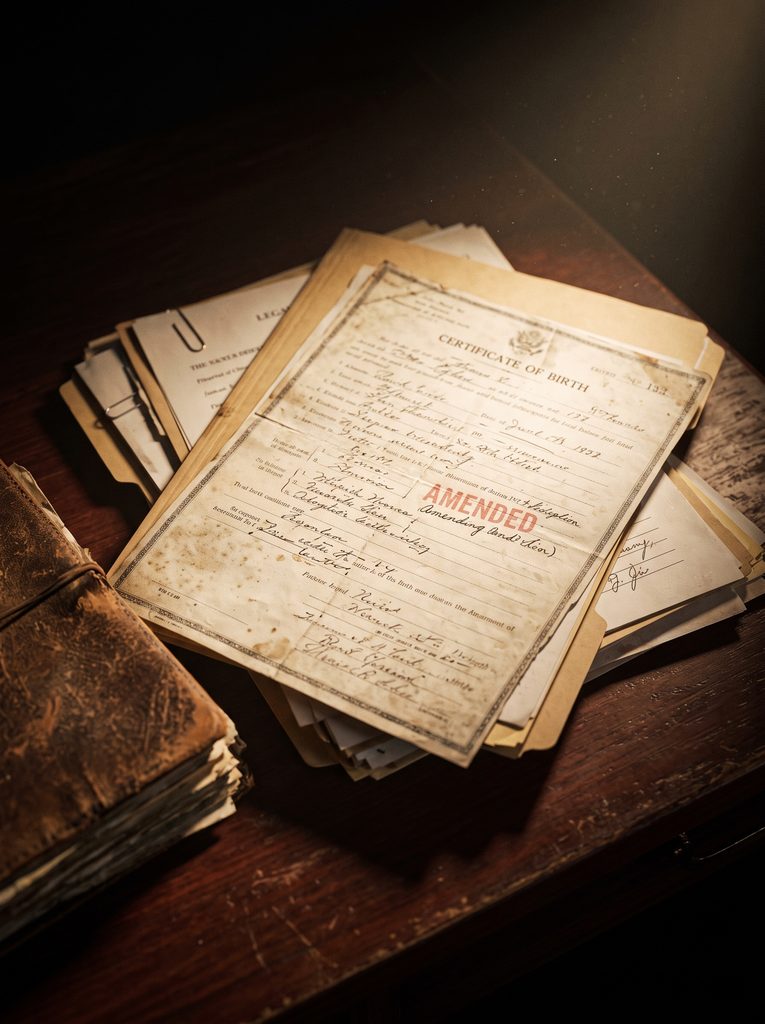
The legal process continued for several months. There were more document requests, discussions between attorneys, and reviews of the transfers that had not been adequately explained. Some expenses were supported by documentation, while others remained disputed. The final resolution required patience and a careful distinction between legitimate decisions, mistakes, and conduct that might have violated the trust agreement. My parents’ relationship with Madison also became more complicated as her yacht business struggled with operating costs and inconsistent bookings. She began to discover that owning an expensive asset was not the same as running a profitable business. I did not celebrate her difficulties, because I never wanted her to fail. I simply stopped taking responsibility for problems I had not created. Meanwhile, I focused on my recovery. My physical therapist encouraged me to measure progress in small steps and reminded me that healing was not a competition. I began to understand that accepting support was not a sign of weakness and that refusing to accept mistreatment was not cruelty. Eventually, the parties reached an agreement to continue the accounting and establish a structured process for resolving the disputed transactions. Certain funds would be repaid under the terms of the settlement, while other items would be addressed through additional documentation and review. Laura explained every provision before I signed, and I asked questions until I understood the agreement. There was no dramatic courtroom victory, no public confession, and no moment when everyone admitted that I had been right about everything. Instead, there was a formal process, a review of the records, and a plan to address the remaining obligations. It was less dramatic than revenge, but it was more useful. I left Laura’s office knowing that I had taken steps to protect my interests without allowing anger to control the rest of my life.
Almost a year after the yacht photograph appeared, my mother sent me a link to an old family album. She had been sorting through photographs and found one she thought I might want. It showed me at seventeen, sitting at my grandmother’s kitchen table with a mug of hot chocolate while Grandma stood behind me with one hand resting on my shoulder. We were both laughing at something outside the frame. On the back, she had written, “Emily is learning that courage doesn’t always look like fighting. Sometimes it looks like asking for what is right.” I stared at the sentence for a long time. My grandmother had understood something I had struggled to learn: being capable did not mean I had to face every hardship alone. She had created the trust to protect my future, not to make me superior to Madison. I could honor her intentions without allowing the dispute to consume the rest of my life. My relationship with my parents became more distant but more honest. I spoke with them occasionally and visited when I felt comfortable, but I no longer shared every detail simply because they were my parents. Trust had to be rebuilt slowly, and I accepted that it might never return to what it had been. Madison and I also began having more honest conversations. One afternoon, we met for coffee, and she admitted that she had not understood everything about the trust. She said she had assumed our parents were helping her with family money and had never asked enough questions. She also admitted that she had interpreted my independence as proof that I didn’t need support. When I told her she could have called me after my injury, she lowered her eyes and said she should have. Her apology was imperfect, but it was more honest than anything she had said before. I wasn’t ready to restore our old relationship, yet I was willing to leave room for the possibility that people could change if they accepted responsibility for their choices.
Today, my leg is stronger than it was during those first painful weeks in the hospital. I still have difficult days, and I continue to follow my rehabilitation plan, but I can walk farther and make plans without constantly wondering whether my body will cooperate. The financial dispute has reached a more stable place through the accounting and settlement process, although not every question about the past received a satisfying answer. Some explanations came too late, and some trust was lost in ways that no agreement could repair. I no longer wake up wondering whether I imagined what happened. I have the records, and I have learned to distinguish what I know from what I fear. Sometimes I still think about that photograph of my parents and Madison standing on the yacht, smiling beneath the bright sun while my mother wrote that family meant everything. For a long time, I believed the photograph represented the moment my family rejected me. Now I see it as the moment I stopped accepting a story that didn’t make sense. The yacht was expensive, while the medical expenses I needed help covering were far more ordinary. My parents chose to celebrate one while refusing to acknowledge the other. That choice hurt me, but it also forced me to ask questions I should have been allowed to ask years earlier. I learned that independence is not the absence of need, forgiveness is not the same as pretending nothing happened, and family is not defined by who shares your last name or appears beside you in photographs. Family is revealed by what people do when helping you becomes inconvenient. My grandmother understood that, and her letter continues to remind me that I deserve honesty, care, and the freedom to make decisions about my own future. I cannot change the choices my parents made or recover the years I spent believing I had to manage everything alone. But I can decide what those years mean. I can ask questions, protect my boundaries, and stop confusing guilt with responsibility. I may never have the family I once imagined, but I now have the courage to seek the truth and the freedom to decide what happens next. Sometimes, that is where a new life begins.
